f
Cart
Cart
No Product
Go find the products you like.



Aesculus hippocastanum
Glossy Green Leaves | White Flower Spikes | Iconic Horse Chestnut
Free 2-Year Rooted & Thriving Guarantee
Grown, Packed, Delivered - To Your Door
Choose a Size


Guarantee
Shipping
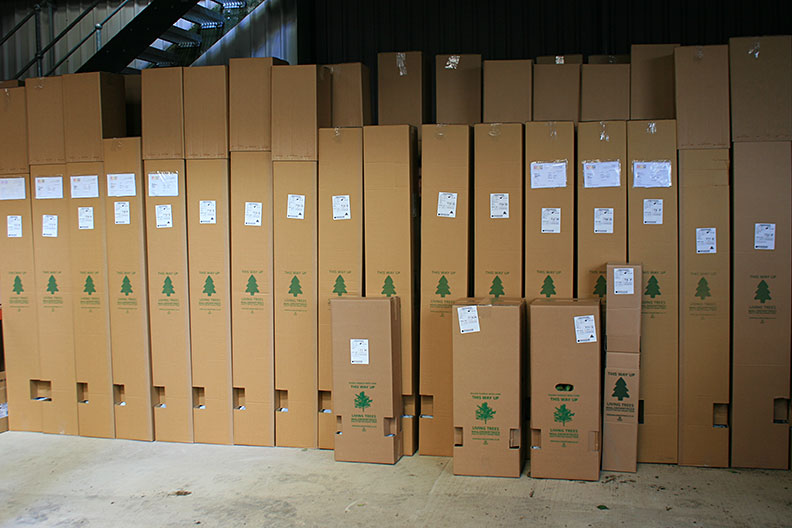
Here at Mail Order Trees, getting your trees and plants to you quickly and in perfect condition is our top priority. A great feature of our specially designed cardboard boxes is that they are 100% recyclable, which will help to reduce your carbon footprint even further.
We have a standard flat rate charge of £9.95 per consignment (including VAT) to England and Wales so the more you buy, the more you save! Prices for Scotland, Grampian, the Highands can be calculated in the checkout area. Unfortunately we are unable to ship to any other locations aside from these. This means we do not ship to Isle of Wight, Channel Islands, Northern Ireland/Ireland and any Scottish Islands.
Our usual delivery time is up to 7-10 working days, excluding weekends and bank holidays. We will, as ever, aim to stick to our usual timescale but please be aware that this may not always be possible. Please take the time to fill out the special instructions box in the checkout area with the details of a neighbour or safe place that your trees can be left. Every effort will be made to make deliveries in this time or on a date requested by you.
Mail-Order-Trees cannot be held responsible for delayed deliveries due to factors beyond our control such as Public Holidays or adverse weather conditions which make it impossible to lift bare-rooted trees. In cases such as these, you will be notified.
We can only deliver to physical addresses and not to PO boxes. A complete address including correct postcode must be provided. Incorrect postcodes cause more delays than omitting the postcode altogether.
Mail-Order-Trees cannot be held responsible for orders not received if an incorrect address is provided. It will also be necessary to give us details of where to place items should you be out when the delivery arrives. Mail-Order-Trees cannot be responsible for items lost if we have followed your instructions. A contact telephone number can also be very useful to our courier.

Aesculus hippocastanum, commonly known as the Horse Chestnut Tree, is a magnificent deciduous tree with an abundance of attractive qualities. Known for its impressive size, distinctive foliage and beautiful spring flowers, it makes an excellent specimen tree for large gardens, parks and spacious public areas where it has plenty of room to develop.
One of the defining features of Aesculus hippocastanum is its large, palmate leaves, which consist of five to seven leaflets radiating from a central point. These emerge fresh green in spring before developing into a dense canopy of deep green foliage throughout summer. As this Horse Chestnut Tree matures, its broad, spreading crown provides plenty of shade and creates an impressive feature in the landscape.
During late spring and early summer, the Horse Chestnut Tree is at its most attractive. The branches become covered in upright spikes of beautiful white, lightly scented flowers, each with delicate pink and yellow markings. These distinctive flower clusters are often described as resembling candles and provide an impressive display during May and June. The flowers are also attractive to bees and other pollinating insects.
Following flowering, Aesculus hippocastanum develops its familiar conkers, which mature throughout summer and autumn. These glossy brown seeds are enclosed within rounded, green, spiny shells that split open as they ripen. Conkers are one of the most recognisable features of the Horse Chestnut Tree and provide plenty of seasonal interest, although they are not edible.
As autumn approaches, the foliage gradually changes to shades of yellow and golden brown before falling. The tree’s strong branches and naturally spreading form then become more visible, providing structure and interest throughout winter.
Aesculus hippocastanum is a hardy and adaptable tree that can grow in a wide range of soil types, although it performs best in moist, fertile, well-drained soil. It thrives in full sun or partial shade and, once established, requires relatively little maintenance.
Due to its substantial eventual size, the Horse Chestnut Tree is particularly well suited to large gardens, parkland, estates and public open spaces. When given enough room to develop naturally, it forms an impressive specimen that can be enjoyed for many generations.
If you are looking for a large, traditional specimen tree with beautiful spring flowers, attractive foliage and an abundance of autumn conkers, Aesculus hippocastanum is an excellent choice.
Common Name: Horse Chestnut
Latin Name: Aesculus hippocastanum
Height in 20 Years:
Width in 20 Years:

Growth Habit:

Planting Position:

Weather Exposure:
Hardiness: